
What I Learned After Discovering 10x The Max Radon Levels In My Ontario Home
The Sullivan Family Story
Ontario, Canada
Indoor Air More Polluted Than Outdoor
Indoor air is frequently 2–5 times, and sometimes over 100 times, more polluted than outdoor air, causing significant health risks.
Concentrated pollutants like volatile organic compounds (VOCs), radon, mold, and pet dander trapped by modern, energy-efficient, sealed building designs is…. both eye opening and terrifying.
I didn’t even know radon existed until my wife mentioned it after a conversation with a friend.
By that point, we had already been living in our home for three years.
Nobody Told Us
We bought our house just before the covid pandemic, and not a single person mentioned radon testing during the process.
Not our realtor. Not the home inspector. Not our lawyer. Not one expert source that we had put so much trust in.
We Tested Our Ontario Home
In 2023 we took action after learning about radon in Canada and immediately bought a continuous test device.
We chose a continuous radon monitoring device because we wanted to understand what was happening inside our house over time, not just get a quick snapshot. (We learned how important this is!)
After three months of monitoring, we discovered our home had 2000 Bq/m³ radon levels.
That is 10 times higher than the maximum radon level the Canadian government recommends taking immediate action to mitigate radon.
At the time we had just had a baby.

Realizing that your family has been spending the majority of the time inside a radon filled home with a cancer-causing gas is a moment you don’t forget.
Both my wife and I had parents who died from lung cancer, one from asbestos exposure and one from a mix of genetics and environmental factors.
Suddenly, this wasn’t just a number on a screen.
It felt like we had been unknowingly exposing our family to something incredibly dangerous.
This high radon reading experience forced us to learn everything we could about radon, how it enters homes, and what actually causes high radon levels.
TL;DR
● High radon levels occur when radon gas from the soil enters a home through openings in the foundation.
● Common entry points include sump pits, cracks in foundations, plumbing penetrations, and basement walls.
● Poor sealing and weak ventilation allow radon to build up inside the home.
● Continuous monitoring is the best way to understand radon levels over time.
● Radon mitigation systems can reduce radon levels by 90% or more.
What Actually Causes High Radon in Homes
There are no areas of the country that are 'radon free,' (Health Canada)
Radon is a naturally occurring radioactive gas that forms when uranium in soil and rock breaks down.
It moves through the soil and eventually escapes into the air.
The problem happens when that gas becomes trapped inside homes.
Your house essentially acts like a vacuum pulling radon gas from the soil beneath it.
Once radon finds an entry point, it can accumulate to dangerous levels.
In our case, after a lot of research and conversations with contractors who specialize in radon mitigation, we discovered the gas was entering through multiple places in our home.
For us, the radon entry points were:
● Sump pits
● Gaps around plumbing pipes
● Cinder block basement walls that weren’t fully sealed
● Well water pipes
● Floor drains
Our house is older, but everything seemed perfectly normal.
Radon was quietly seeping in through these areas and building up at incredible dangerous levels without a single noticeable sign.
How Radon Enters Homes
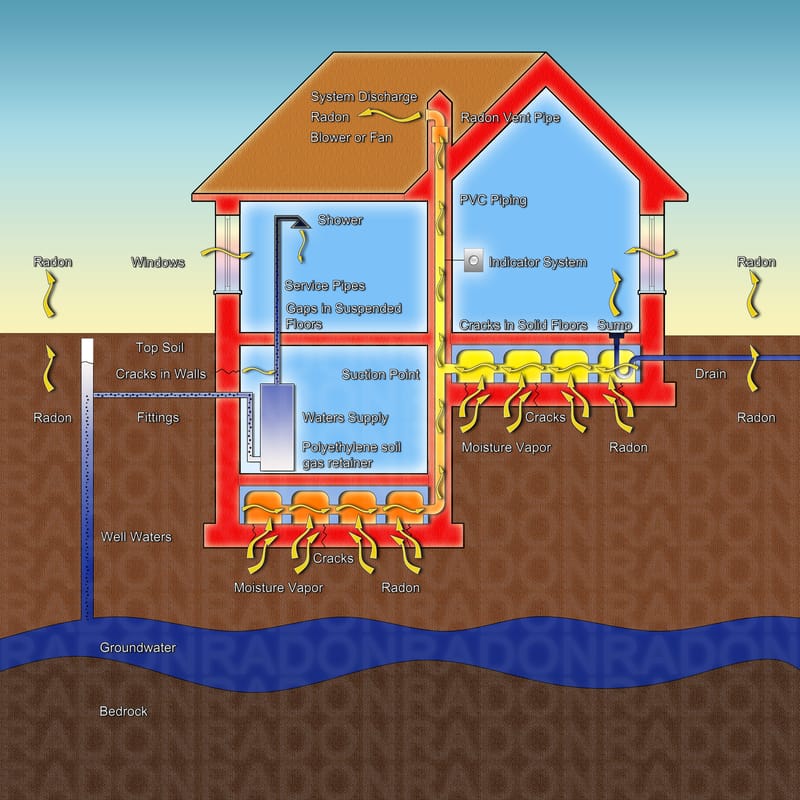
Radon doesn’t need a large opening to enter a house. Even small gaps can allow the gas to seep inside in massive quantities.
The most common entry points include:
● Foundation cracks
● Floor drains
● Sump pits
● Gaps around plumbing pipes
● Unfinished basement walls
● Concrete slabs
● Mortar joints in block walls
● Gaps in floor-wall joints.
● Openings for utilities.
● Construction joints
● Well water systems
Once radon enters a home, it first accumulates in lower levels (basements / crawl spaces) if you have them.
But what surprised us was that it doesn’t always stay there.
Because of airflow inside the house, and the very nature of gas, radon travels upward and affects multiple floors.
In our home, high levels were detected not only in the basement but the main floor was equally as bad. I nearly cried thinking about the year our 1 year old slept breathing in a pack of cigarettes per day.
Why Some Homes Have Much Higher Radon Than Others
One of the biggest misconceptions we discovered is that people assume radon only affects certain types of homes.
Many homeowners believe things like:
● “My house is new, so I’m safe.”
● “My neighbor doesn’t have radon, so I probably don’t either.”
● “Opening windows should fix it.”
None of those assumptions are reliable.
Radon levels depend on several factors:
● the soil beneath the home
● how the house is constructed
● how well the foundation is sealed
● how air flows through the building
Two houses sitting side-by-side can have completely different radon levels. Yes, and age of home does not matter.
Continuous monitoring is the only way to know.
The Hardest Part: Figuring Out What to Do Next
Discovering high radon levels is stressful.
When we saw our radon test results, we suddenly had dozens of questions.
● Can we fix this ourselves?
● How much will this cost?
● Who can we trust to help us?
Finding trustworthy radon mitigation specialists was surprisingly difficult.
Maybe because of all the questions we had, and maybe it had a bit to do with how frustrated, angry, disappointed we were.
Feeling these natural feelings and figuring out what to do can be frustrating, but dealing with radon doesn’t need to be.
There were only a few contractors we could find who truly specialized in radon mitigation.
One only did commercial properties.
The others seemed more interested in taking advantage of our situation and we felt uncomfortable with their approach.
All I wanted was a simple place to get answers.
● What does radon mitigation cost?
● Can I mitigate radon myself?
● How long will addressing my radon issue take?
● What are the risks if I wait to address the radon levels?
The lack of clear information, and a trusted network to turn to was frustrating.
We only got more frustrated the more radon questions we realized we needed answers to with no central comprehensive resource to get them from.
I was frustrated because of the guilt of thinking "I should have known about radon sooner."
I wish I had been warned about radon by anyone, the cashier at the grocery store even.
Particularly since radon testing and mitigation are ultimately not complicated, nor expensive.
But it is dangerous, and needs attention. Health Canada's website says "Don't ignore it! Radon is a serious health issue".
How Radon Mitigation Actually Works
Once high radon levels are confirmed, the focus shifts to mitigation.
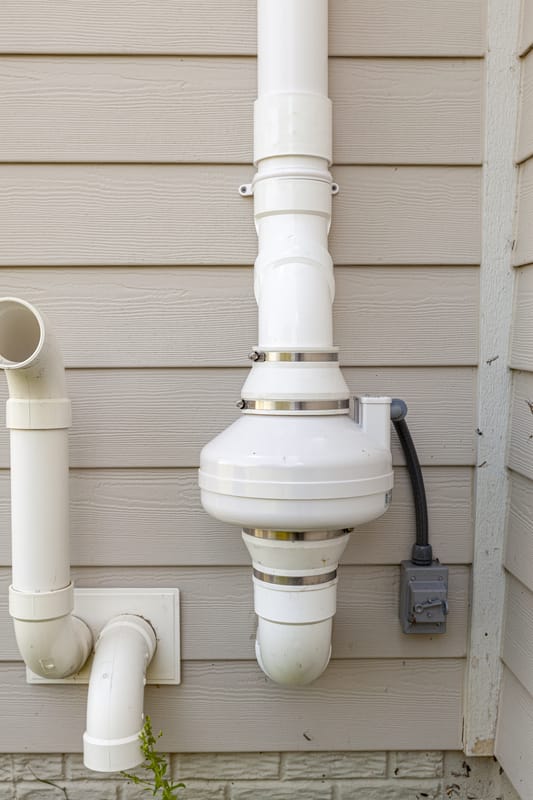
Radon mitigation systems are designed to pull radon gas away from the house and vent it safely outside.
The most common approach is called sub-slab depressurization.
This involves installing:
• a pipe beneath the foundation
• a radon fan that draws gas from below the house
• a vent pipe that releases the gas above the roofline
These systems are extremely effective.
Most homes see radon levels drop by 90% or more after proper mitigation.
In addition to installing mitigation systems, contractors often recommend:
● sealing foundation cracks
● improving ventilation
● sealing sump pits and other entry points
● and more radon mitigating strategies
What Radon Mitigation Can Cost in Canada
Costs vary depending on the home and the severity of the problem.
From our research and discussions with contractors:
DIY mitigation projects can cost roughly:
$2,000 – $10,000
Professional installation (All included) typically ranges from:
$6,000 – $20,000+
In extreme cases involving very large homes or extremely high radon levels, costs can go even higher.
But it’s important to keep perspective.
Radon mitigation systems dramatically reduce the presence of a lung-cancer causing agent.
There is no cost that shold deter anyone from eliminating this risk.
This is part of home ownership. It just historically has not been spoken about widely.
Radon needs to be more talked about, and this cost needs to be factored into any home buying decision. Our health and longevity is not something to be traded off here.
Additionally, we spend a fortune on nutrition and exercise, but what's the point if your house health is negating all those efforts.
Your health is woven into the health of your home. Period.
This makes so much sense that it’s shocking radon isn’t more widely talked about.
What I Tell Anyone Who Discovers High Radon
After going through this process, there are several things I now tell everyone.
1. Your homes health is YOUR health.
● We spend enormous energy on diet, fitness, and sleep.
● If the place where you spend 90% of your time is filled with toxins, those efforts are being completely undermined.
● Your home environment needs to be factored into your health plans.
2. Use continuous radon monitoring.
● Radon levels fluctuate throughout the year.
● Continuous monitoring allows you to track trends and verify whether mitigation systems are working.
● Radon detectors should be as common as smoke detectors and carbon monoxide detectors.
● Radon tells you more about your environment than just whether it’s making you sick. It gives you an indication of what is structurally going on inside your home.
3. Get connected with knowledgeable communities.
● One of the best things you can do is connect with groups that understand home health and radon mitigation.
● Online communities, homeowner groups, and experienced contractors can provide guidance and share valuable insights.
● The more you learn, the easier the process becomes.
4. Don’t panic — most homes can be fixed.
● Radon mitigation is incredibly effective.
● Most homes can be brought down to safe levels relatively quickly.
● With the right guidance and monitoring, the process can be much simpler than people expect.
5. Spread the word
● The hardest part about radon isn’t fixing it.
● The hardest part is not knowing about it.
● Most homeowners have never heard about radon until they discover it in their own home.
That changes with you!
Our Experience With High Radon
Our interest in radon started when we tested our own home and discovered levels of 2000 Bq/m³, ten times higher than the recommended mitigation guideline.
After months of research, continuous monitoring, and conversations with contractors, we learned how radon enters homes and how mitigation systems dramatically reduce levels.
That experience is what led us to WellNest.
Their goal is simple:
Make sure homeowners understand the hidden risks inside their homes and have access to the information and resources they need to protect their families.
Learn >> Test >> Act
Now you know. You've found your community. Stay healthy. A healthy home is a healthy family.
-The Sullivans
Ontario, Canada
FAQ
The Canadian government recommends taking action if radon levels exceed 200 Bq/m³.
Opening windows may temporarily reduce radon levels, but it is not a reliable long-term solution.
Yes. Radon levels depend on the soil beneath the home, not the age of the house.
Even newly built homes can have high radon levels.
Continuous monitoring helps track seasonal fluctuations and ensures mitigation systems are working effectively.
Radon gives you insight into structural changes in your home and many devices help read more than just radon levels.
Latest posts


Keep up with all the latest!
Get our curated content delivered straight to your inbox.
Created with ©systeme.io
Privacy policy | Terms of use | Cookies